
Bartlett's Familiar Quotations Book Download PDF
Rating : 

More than 150 years after its original publication, BARTLETT'S FAMILIAR QUOTATIONS has been completely revised and updated for its eighteenth edition. BARTLETT'S showcases a sweeping survey of world history, from the times of ancient Egyptians to present day. New authors include Warren Buffett, the Dalai Lama, Bill Gates, David Foster Wallace, Emily Post, Steve Jobs, Jimi Hendrix, Paul Krugman, Hunter S. Thompson, Jon Stewart, Elizabeth Kubler-Ross, Barack Obama, Che Guevara, Randy Pausch, Desmond Tutu, Julia Child, Fran Leibowitz, Harper Lee, Nassim Nicholas Taleb, Patti Smith, William F. Buckley, and Robert F. Kennedy. In the classic BARTLETT'S tradition, the book offers readers and scholars alike a vast, stunning representation of those words that have influenced and molded our language and culture.

Don’t go through your EMT training course without this handy reference! Packed with valuable information on scene size-up and patient assessment, this guide is an essential study tool for EMTs in training and an excellent refresher for EMTs already in the field. This guide also features a large section on anatomy, physiology, and pathophysiology of all major body systems, along with common disorders and injury management. Helpful illustrations and tables are included for quick reference.


The Psychotherapist’s Essential Guide to the Brain is a 147 page full-colour illustrated guide for psychotherapists describing the most relevant brain science for today’s mental health professionals. Taken from the best of the series published in The Neuropsychotherapist, and completely revised, this book represents an easy to read guide for anyone working in the mental health arena.
In February 2016, The Neuropsychotherapist, a magazine devoted to informing mental health professionals about the neuroscience of psychotherapy, introduced a regular column on the brain for the practising clinician. The column proved popular because it interpreted relevant facts from a large body of technical knowledge in language accessible to the non-scientist. In view of the positive readership response, it was decided to compile all instalments of The Psychotherapist’s Essential Guide to the Brain together with new material into a stand-alone volume that might become a handy addition to the psychotherapist’s bookshelf.
Why learn about the brain? Surely a therapist has a range of therapies and techniques at his or her disposal that can be effectively implemented without a degree in neurobiology. Certainly some would argue that the application of techniques and the experiential learning of what works and what doesn’t is the path to take. But is this the best approach, in light of the knowledge that is now available to us? Does a medical doctor familiarize him or herself with only the symptoms and not the cause and mechanisms of an illness?
“There is, I believe, much to be gained by understanding at least the fundamentals of brain function that play a critical role in our mental well-being,” says author Matthew Dahlitz, psychotherapist and Editor-in-Chief of The Neuropsychotherapist.
Freud, some will be surprised to learn, began his career as a neurobiologist, studying the nerves of crayfish with a view to forming an objective science of mental states based on neuroscientific research. Later he altered direction into psychoanalysis—research was not paying the bills, and the neuroscience of the day avoided the difficult subject of subjective experience and focused on the “nuts and bolts” of brain function. Now, with a greater understanding of both the subjective experience of the mind and the objective activities of the brain, the two disciplines of psychoanalysis and neuroscience can not only inform one another but integrate to provide a more mature and holistic understanding of mental well-being.
“It is my hope that this book will open your mind and encourage you to take a more holistic perspective than ever before,” says the author. “As therapists we are privileged to live in a time when breakthroughs in the neurobiological sciences are both confirming and informing vital aspects of psychotherapeutic practice, breaking down traditional barriers and stimulating multidisciplinary approaches that will ultimately revolutionize how we think about mental health.”
For the psychotherapist this book may well form an important step along the way to acquiring the best tools and knowledge available in the quest for real change and lasting well-being for their clients.
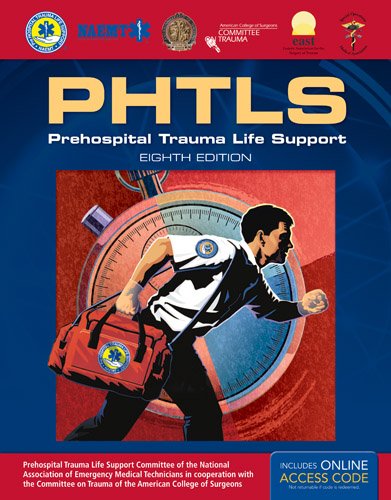
Each new print copy of PHTLS: Prehospital Trauma Life Support, Eighth Edition also includes an access code that unlocks a complete eBook and skills videos. PHTLS: Prehospital Trauma Life Support, Eighth Edition is the premier and proven global prehospital trauma education program from NAEMT. For three decades, PHTLS has improved the quality of trauma patient care and has saved lives. The eighth edition of PHTLS continues the PHTLS mission to promote excellence in trauma patient management by all providers involved in the delivery of prehospital care through global education. This legendary program was first developed by the National Association of Emergency Medical Technicians (NAEMT) in the early 1980s in cooperation with the American College of Surgeons Committee on Trauma (ACS-COT). Its medical content is continuously revised and updated to reflect current, state-of-the-art knowledge and practice. PHTLS promotes critical thinking as the foundation for providing quality care. It is based on the belief that EMS practitioners make the best decisions on behalf of their patients when given a good foundation of knowledge and key principles. The eighth edition of PHTLS features a new chapter, Physiology of Life and Death. This chapter creates a solid understanding of the physiology of life and pathophysiology that can lead to death. This understanding is essential for the prehospital care provider if abnormalities are to be found and addressed quickly in the trauma patient. Clear Approach to Assessing a Trauma Patient In the field, seconds count. PHTLS teaches and reinforces the principles of rapidly assessing a trauma patient using an orderly approach, immediately treating life-threatening problems as they are identified, and minimizing any delays in initiating transport to an appropriate destination. Dynamic Technology Solutions World-class content joins instructionally sound design in a user-friendly online interface to give instructors and students a truly interactive and engaging learning experience with: • eBook • Video Demonstrations of Critical Skills • Interactive Lectures

It is difficult to improve on a classic, but the fifth edition of Psychodynamic Psychiatry in Clinical Practice does just that, offering the updates readers expect with a deft reorganization that integrates DSM-5(R) with the author's emphasis on psychodynamic thinking. The individual patient is never sacrificed to the diagnostic category, yet clinicians will find the guidance they need to apply DSM-5(R) appropriately. Each chapter has been systematically updated to reflect the myriad and manifold changes in the 9 years since the previous edition's publication. All 19 chapters have new references and cutting-edge material that will prepare psychiatrists and residents to treat patients with compassion and skill. The book offers the following features: - Each chapter integrates new neurobiological findings with psychodynamic understanding so that clinicians can approach their patients with a truly biopsychosocial treatment plan.- Excellent writing and an intuitive structure make complicated psychodynamic concepts easy to understand so that readers can grasp the practical application of theory in everyday practice.- The book links clinical understanding to the new DSM-5(R) nomenclature so that clinicians and trainees can adapt psychodynamic thinking to the new conceptual models of disorders.- New coverage of psychodynamic thinking with relation to the treatment of patients on the autism spectrum addresses an increasingly important practice area.- Posttraumatic stress and dissociative disorders have been combined to allow for integrated coverage of primary psychiatric disorders related to trauma and stressors. A boon to clinicians in training and practice, the book has been meticulously edited and grounded in the latest research. The author firmly believes that clinicians must not lose the complexities of the person in the process of helping the patient. Psychodynamic Psychiatry in Clinical Practice, Fifth Edition, keeps this approach front and center as it engages, instructs, and exhorts the reader in the thoughtful, humane practice of psychodynamic psychiatry.

This second edition of Epidemiologic Methods offers a rigorous introduction to the concepts and tools of epidemiologic research. Aimed chiefly at future epidemiologists, the book offers clear descriptions, practical examples, and question/answer sections for each of the science's key concepts. Authored by two award-winning epidemiology instructors, this book is ideally suited for use as a text in a graduate-level course sequence in epidemiologic methods.
The book's chapters are organized around three main themes: general concepts and tools of epidemiology; major study designs; and special topics, including screening, outbreak investigations, and use of epidemiology to evaluate policies and programs.
With additional exercises at the end of each chapter and expanded attention to topics such as confounding, this new edition of Epidemiologic Methods is an indispensable resource for the next generation of epidemiologic study.
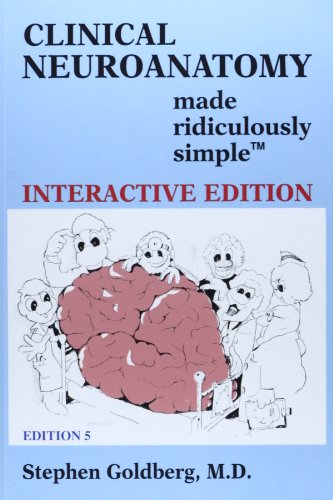
This now-classic text presents the most relevant points in clinical neuroanatomy with mnemonics, humor and case presentations. For neuroanatomy courses and Board review. Includes attached CD-ROM on Neurologic Localization with 3D animated rotations of the brain. Neuroanatomy laboratory tutorial with photographs of brain specimens. Clicking on any area of the nervous system reveals the name of the structure and the effects of an injury to that area, with explanations. Selecting a symptom graphically shows all areas of the nervous system that, when injured, could result in the symptom. Tutorial on how to localize neurologic injuries; Interactive quiz of classic neurologic cases; Windows/Macintosh CD + book. 5th edition adds a new chapter on neurotransmitters.
